
 Facebook
 X
X
 Pinterest
 Copy Link
10 Predictions for the 2021 Housing Market by Windermere’s Matthew Gardner

.
Top 10 Things to Look Out for in 2021
.
.
1. Economic growth will pick up – but not until the summer.
I am expecting solid employment gains in 2021, but growth is likely to start in earnest in the second half of the year once the vaccine has been more widely distributed. I believe job growth will increase as spending rises. Once people feel more comfortable going out again it will give a much-needed boost to the economy and job market.
.
2. The move to the suburbs is real – but don’t get carried away!
There has been a lot of talk about a COVID-19 induced flight away from cities and into the suburbs and outlying areas. While I do believe there will be a migration away from some of our core cities this year, most people won’t move far, as working from home will not be a full-time situation for many workers who will split their time between home and office.
.
3. Not all apartment markets are created equal.
Apartment owners in pricey markets across the country will continue to suffer in 2021, but after many years of being overlooked, smaller cities will perform rather well. It is my prediction that apartment developers will start to turn their attention toward suburban markets and away from many of these larger cities. We haven’t seen that in over a decade.
.
4. The luxury housing market will continue to perform very well.
The luxury housing market, which performed far better than anyone expected in 2020, will continue to be robust in 2021. The primary reason for this will be interest rates. Jumbo mortgage rates saw a spike at the start of the pandemic but have since dropped significantly which is benefitting luxury home buyers. Furthermore, as the country starts to reopen post-COVID, I believe we will see a rebound in foreign buyers.
.
5. Cities will start to pay more attention to zoning (at long last!).
Although it won’t happen overnight, I am hopeful that discussions around zoning changes will start to pick up steam this year. I believe there will be more attention by legislators on increasing the supply of land for residential construction and many will do this by adjusting current zoning policies to free up more land on which to build.
.
6. Adaptive reuse will gain more traction.
Developers will pay more attention to the potential for repositioning existing buildings, as well as ground-up construction. Although I don’t see developers looking to convert office buildings into residential uses, I am watching hotels (mainly motels and inns), which are likely going to continue to be hard hit for years, and alternative uses may make sense. Additionally, strip malls and regional malls may become of interest to developers. I believe there is the potential for some regional malls to be converted into mixed-use projects, while strip malls may get rezoned into single
residential use.
.
7. What’s important in a post-COVID-19 home?
Due to COVID-19, homeowners want more space and builders have taken note. After several years of building smaller homes, the average new home size is actually starting to increase.
I also expect to see buyers listing high-speed internet access as a requirement rather than an option (mainly in rural areas), and open floor plans that were once a must, will be replaced with more room separation.
.
8. Worries about forbearance are overblown.
I do not anticipate a wave of foreclosures following the end of forbearance, and foreclosures that do occur will have a limited impact on the broader housing market. A lot of people fear that when forbearance expires, we will see a tsunami of foreclosed homes and that this increase in supply will lead to homes values dropping. I say it won’t happen, and here’s why. Firstly, the number of homes in forbearance is already down by 43% from its May peak. The trend is headed in the right direction. Secondly, I believe as owners start to get back to work again, many will be able to either refinance their loans, or work with their lenders to extend the term of their mortgages in order to make up missed payments and avoid foreclosure. I would also add that if there are homeowners who can’t get back on track, they will sell their homes to keep the equity they have built. In most markets across the country, there will be enough buyer demand that they will be able to get out from under forbearance by selling and paying off the mortgage and missed payments. All that said, I am a little worried about urban condominium owners who are in forbearance, as the supply of
these properties is already on the rise, causing price growth to soften relative to single-family homes. This may be an obstacle to some condo owners who want to get out from under forbearance by selling.
.
9. Mortgage rates will rise – but don’t worry.
Rates for 30-year conforming mortgages have broken below all-time lows 16 times since the pandemic started; however, they are unlikely to drop much more. That said, I don’t anticipate them rising too much this year, averaging around 3.2%.
.
10. U.S. home sales will rise significantly, but price growth will moderate.
There will be even more demand from buyers this year, and the good news is that I expect listings to increase as people look to relocate. This will allow 2021 home sales to rise to a level we haven’t seen since 2006! Big players in the market to buy this year will be renters who will choose to move out of expensive cities because they are working from home and no longer need to live close to their office.
.
My forecast is for existing home sales to rise by 7.7% in 2021 to around 6.2 million units. I also predict that home prices will increase in 2021 but slowly rising mortgage rates, combined with affordability constraints in many markets, will act as a headwind and slow appreciation. Average prices will rise by a relatively modest 4.1% in 2021.
.
MATTHEW GARDNER
Chief Economist, Windermere Real Estate
Chief Economist, Windermere Real Estate.
.
The Q4 2020 | Western Washington Gardner Report

The following analysis of the Western Washington real estate market is provided by Windermere Real Estate Chief Economist Matthew Gardner. We hope that this information may assist you with making better-informed real estate decisions. For further information about the housing market in your area, please don’t hesitate to contact a Windermere Stanwood / Camano Island agent.
REGIONAL ECONOMIC OVERVIEW
After the COVID-19-induced declines, employment levels in Western Washington continue to rebuild. Interestingly, the state re-benchmarked employment numbers, which showed that the region lost fewer jobs than originally reported. That said, regional employment is still 133,000 jobs lower than during the 2020 peak in February. The return of jobs will continue, but much depends on new COVID-19 infection rates and when the Governor can reopen sections of the economy that are still shut down. Unemployment levels also continue to improve. At the end of the quarter, the unemployment rate was a very respectable 5.5%, down from the peak rate of 16.6% in April. The rate varies across Western Washington, with a low of 4.3% in King County and a high of 9.6% in Grays Harbor County. My current forecast calls for employment levels to continue to improve as we move through the spring. More robust growth won’t happen until a vaccine becomes widely distributed, which is unlikely to happen before the summer…
A Guide for First-Time Home Buyers
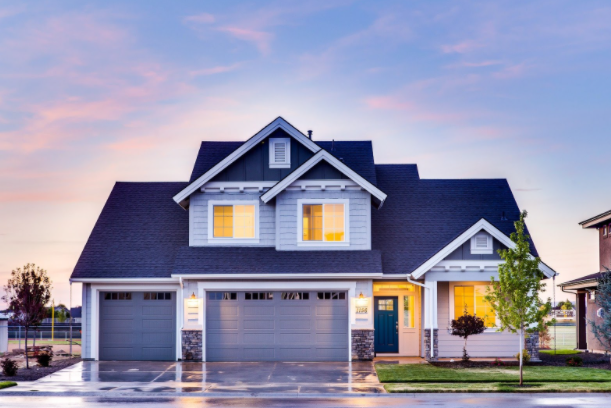
Buying a home is a huge investment. You want to ensure that you’re making the right choice for yourself and your finances. If you are thinking about buying your first home, there are some things to consider.
.
Prepare Your Finances
Owning a house is much more expensive than renting, as you have to pay for upkeep and maintenance. As a result, you need to ensure that you are in a good financial position before purchasing a home.
Try to improve your credit score by clearing your debts and paying bills on time. A higher credit score can help you secure a mortgage and lower your interest rates.
You will need to save up money for a few reasons. Though you are making a monthly mortgage payment, there are some large costs that come with owning a home.
The first thing to save up for is an emergency fund. When you are responsible for the maintenance of your home, sudden large costs can arise. While this is not an immediate expense, it is essential that you have some money saved up for emergencies.
The second thing is your down payment. We recommend putting down an upfront payment of 20 percent or more.
This way, you won’t have to pay for private mortgage insurance, which protects the lender against the possibility you might foreclose. PMI typically costs one percent of the total loan each year, adding up to thousands over the years.
Budget
Before looking at houses, you need to determine your monthly budget. Figure out how much you spend in a month currently compared to your net pay.
Factor in your probable housing expenses, including property taxes and homeowner’s insurance. You do not want your housing costs to be more than a quarter of your net income. Make sure to leave room for extra expenses like repairs and maintenance.
Find a Mortgage Lender
While it may be tempting to go with the cheapest mortgage lender available, these companies tend to have high-interest rates and adverse long-term requirements. Some specific types of mortgages to avoid are:
- Adjustable-rate mortgages, where the lender transfers the risk of rising interest rates to you.
- FHA loans, which typically require a mortgage insurance premium.
- VA loans, as you could end up owing more than your home’s market value, and the VA tends to have high fees.
We suggest getting a 15-year, fixed-rate conventional mortgage with a 20 percent down payment. While you may wish to go with the 30-year plan, you will end up paying thousands of dollars more in the long run.
With a 15-year plan, you can pay off your home in half the time, and you will have lower interest rates. Additionally, fixed-rate plans ensure that you do not have to worry about rising interest rates.
Finding Your Home
The first thing to do before shopping for your new home is to get preapproved for your loans. This shows sellers that you are a serious buyer with the ability to make a purchase. For those in competitive markets, it can help you stand out from other buyers.
Next, look for a home in your price range. Don’t ‘window shop’ more expensive homes, as there is a possibility you’ll fall in love with a house you cannot afford. Find a home that fits the budget you made and costs less than 25 percent of your net income a month.
If you find a home you like, research the neighborhood and visit its open house. See what the area looks like and figure out if you can see yourself living there. Remember that buying a home is a long-term commitment, so if you are not satisfied with the location or another unchangeable aspect of the house, it may not be the one for you.
Closing
First-time home buyers typically have a lot of questions about closing. Closing usually takes about a month and a half, though it depends upon the individual sale.
Additionally, you’ll want to save up for the closing cost, which is about three or four percent of the purchase price. Closing costs are the fees and expenses to finalize a mortgage.
Final Thoughts
Buying a home is a huge commitment, and it can be intimidating for first-time buyers. However, with a knowledgeable Windermere agent, you can hit the ground running, and you’ll be living in your dream home in no time.
If you are a first-time buyer looking to move to Camano Island or Stanwood WA, contact us at 360-387-HOME or get in touch with one of our agents on our website. We can help you easily navigate the process of purchasing your first home, and we’ll find you the perfect home to fit your budget and vision.
Market Insights | December 2020



Windermere Real Estate Designated Broker | REALTOR®
Owner, Windermere Stanwood & Camano Island
360-387-HOME
.
Ways to Save Money by Going Green
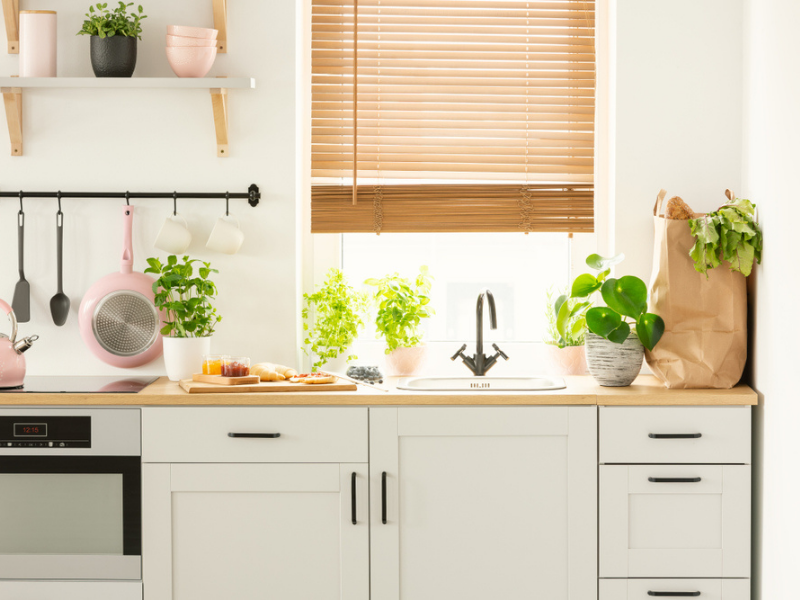
Contrary to popular belief, going green does not have to be hard or cost money, in fact it can even save you money. There are many small things that you and your family can do within your home to save money while reducing landfill waste and the use of natural resources. Discover a few ways to go green and save some money by choosing a green home.
Compost Bin
Composting is free and can provide you with rich soil to garden with. You will never have to buy soil and can easily grow plants and vegetables. To create your own bin, get a large trashcan with a locking lid, then drill about 25 holes all around the bin and attach the bin to small platform (allows it to drain). Once you start putting approved items in the bin go outside and roll it around in the grass every few days.
Energy Efficient Light Bulbs
You can save approximately $75 dollars a year by replacing your traditional incandescent with energy efficient light bulbs. On average energy efficient light bulbs typically use way less energy and can last much longer, not needing to be replaced as much.
Laundry
There are quite a few options to save money and energy when it comes to laundry. Here are a few: wait till you have a full load of laundry to wash, line dry your clothes, wash your clothes in cold water and when it comes time to get a new washer and dryer buy an energy efficient one.
Weather-Strip & Caulk
One of the main ways we use a lot of energy, especially in hot and cold climates, is through air-conditioning and heating. One way to reduce the use of heating and air-conditioning is to properly weather strip and caulk all windows and doors keeping your home cool and warm when needed.
Reuse and Reduce
Use items more than once when you can to avoid throwing them out; this might mean buying quantity over quality. Another way is to join The Freecycle Network or Buy Nothing group on Facebook you can swap used goods with neighbors for free and also keeping more waste out of landfills.
DIY Cleaning
Start making your own cleaning products. Not only can you customize, make them eco-friendlier but you will also save money buying products. On average, most DIY cleaners cost less than a $1 to make per bottle compared to $5-$15 per store bought bottle.
Unplug & Turn Off
Put all your major electronics on a power strip and shut off when they are not in use. Even if your electronics are shut off, they still will continue to draw electricity thought out the day. Another tip is to make sure you unplug your cellphone when completely charged and always power everything down while not in use to save on battery life.
Toilet
There is an extremely easy way to make your toilet a low flow toilet. Simply add a brick, wrapped in a waterproof bag or take a plastic water bottle and fill it with sand putting it into your tank. This will reduce the amount of water with every flush. Once you are ready for a new toilet purchase a low-flush toilet.
Shower
Change up your shower head with an energy-efficient shower head that will use half the amount of water. These shower heads are low flow but will significantly cut your water bill down. Another option is to install a tap aerator which will also cut down water usage without changing the water pressure.
by Sandy Dodge
Top 10 Things to Do in Stanwood & Camano Island (Winter Edition)


Although Stanwood and Camano Island are best known for the summer season, there’s plenty to keep you occupied year-round. Here are our top ten winter activities to enjoy in the Stanwood Camano area.
.
1. Arrowhead Axe
Bring out your inner lumberjack with Camano Island’s first axe-throwing venue. Enjoy the exciting art of hurling axes for 90 minutes at Arrowhead Ranch—remember to wear close-toed shoes and dress for the cold weather (the range is under cover, but outside).
.
2. Hike Cranberry Lake
The Cranberry Lake trail is a gentle 2.1 mile hiking trail with a trailhead in Cama Beach State Park. Enjoy the scenic peacefulness of the winter woods with your family and your four-legged companions, too.
.
3. Sled at Terry’s Corner
Terry’s Corner and nearby Freedom Park are perfect for sledding on fresh snowfall. How good are Camano Island slopes? Last year, the USA Olympic luge sled team itself came to Camano to help kids try out the sport!
.
4. Coffee at Locals
Winter is the perfect time for a warm drink. Be sure to drive through and pick up a coffee at Locals Espresso in Stanwood, voted Best Espresso in Stanwood and Camano Island for 10 years.
.
5. Snow Goose Migration in Stanwood
Birdwatchers rejoice. The 2021 Stanwood Camano Snow Goose and Birding Festival, scheduled for February 27 and 28, is the place to spy majestic migrating snow geese, great blue heron, eagles, hawks, and countless other species.
.
6. Participate in Glass Quest
Described as the greatest treasure hunt in the Pacific Northwest, Stanwood and Camano Island host the Great Northwest Glass Quest (Feb. 12-21, 2021). Teams will search for unique, hand-blown glass balls created by famous artists.
.
7. Drive-Thru Christmas Lights
Christmas traditions may look a little different this year, but they can still be magical. Located in Stanwood, the Lights of Christmas’ “Drive-Thru Christmas” lets you and your family enjoy incredible light displays and Christmas music from the comfort of your car.
.
8. Browse the Kristoferson Farm Stand
Shop for produce, breads, wine, cheese, gifts, and fine food. Gift baskets available too. The Fam Stand at Kristoferson Farm is a winter wonderland boutique with tons of handmade local goods. Check the website for canopy tours and other year-round activities.
.
9. Read with Camano Island Library
Winter = time to curl up with a good book. Check out books for a socially distanced pickup from the Camano Island Library or browse the library’s wide variety of virtual events, including online pub trivia, crafts, and stay-at-home storytime.
.
10. Explore Local Art
Stanwood and Camano Island are home to a significant number of the PNW’s incredible local artists. Check out the indoor and outdoor winter offerings at the Matzke Fine Art & Design Gallery, including its unique sculpture park.
.
.
Whether you’re here to stay or just visiting, Stanwood and Camano Island have plenty to offer! Come spend a wintry day or two cozying up to the stunning natural vistas and friendly local businesses of the Puget Sound.
Market Insights | November 2020

- Camano Island inventory is down 71% from this time last year, Stanwood is down 50%
- Number of homes sold YTD is up 2% on Camano Island, and 22% in Stanwood
- Average sales price is up in both markets. 17% on Camano Island and 9% in Stanwood year over year
.
.
Windermere Real Estate Designated Broker | REALTOR®
Owner, Windermere Stanwood & Camano Island
360-387-HOME
.
Why Q4 Is A Good Time To Sell

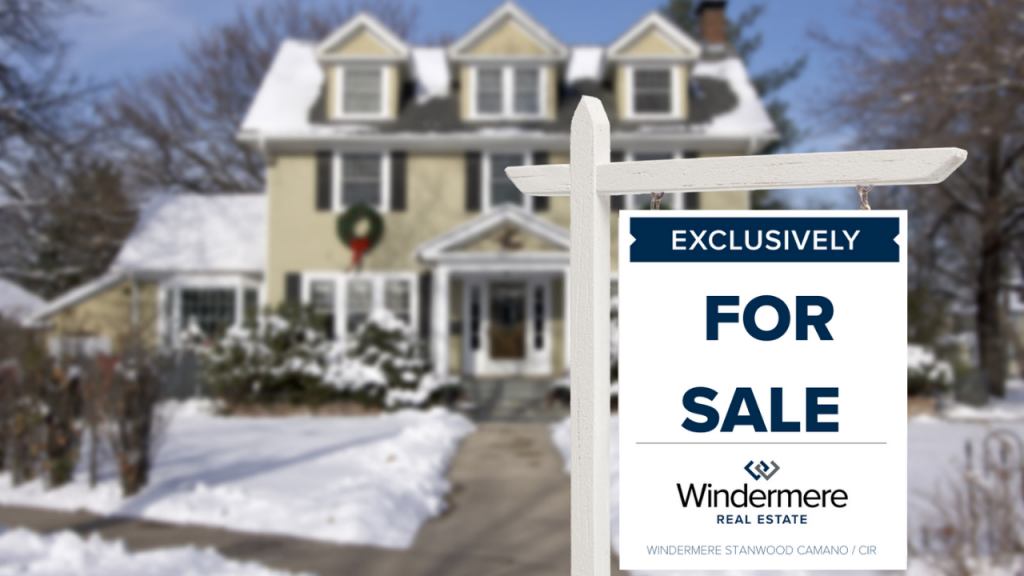
Just because the weather’s turning chilly doesn’t mean the final quarter of the year is a frozen market for sellers, even during a pandemic. In fact, here are four considerations that make a strong argument for why selling during Q4 could be an excellent decision—especially right now.
Seasonal sell: easier than you think
Although traditional wisdom suggests the spring is an ideal time to list your property, selling in the winter brings its own advantages. Sellers during the winter enjoy more serious house hunters, employees relocating in January/February, and the uniquely cozy staging of their homes during the winter holidays.
In fact, according to HomeLight’s 2019 insights survey of top-performing real estate agents, 89% of agents sold homes decorated for the holidays last year. These numbers also show that Q4 houses sold for the exact same amount (or more!) compared to earlier quarters and faced significantly less competition.
Benefit from low inventory
Houses sold in Q4 benefit from low inventory. If you’re the only house with a “For Sale” sign in your neighborhood, interested searchers are far more likely to choose your home, particularly if it’s affordable. We’ve seen this play out right here in Stanwood and Camano Island’s third quarter, a strong seller’s market with record low inventory.
A Q4 house can also go for a higher price. 2019 data from the National Association of Realtors supports this observation; last year, U.S. home prices jumped in 94% of markets measured in Q4, directly connected to the steep decline in housing inventory.
Winter buyers are extra eager
Is the COVID-19 pandemic going to set back Q4 home sales? Even in normal times, the vast majority of buyers typical home buyers turn to the Internet first when searching for a new home. Now, interested buyers have been longingly browsing online real estate and newly available virtual tours ever since March.
After waiting to buy houses for most of the year, thwarted by the early waves and lockdowns of the pandemic, buyers may actually be more keen to buy now—especially if your property comes with gorgeous listing pictures.
Urban flight
The pandemic has also caused an unprecedented increase in urban flight. Large amounts of families, professionals, and retirees are departing densely populated urban centers for more remote, rural, or island locales. In Washington state, this continues a trend already observed in homeowners’ movement out of the Seattle area and into regions like the Methow Valley, a promising sign for our beautiful properties here in Stanwood and Camano Island.
Market Insights | October 2020

- Camano Island inventory is down 41% from this time last year, Stanwood is down 39%
- Homes Sold YTD on Camano Island is down 4%, but up 15% in Stanwood
- Average Sales Price is up in both markets. 16% on Camano Island and 7% in Stanwood year over year
.
Supply and demand continue to drive the Stanwood and Camano Island real estate market. Record low-interest rates have increased purchasing power.
Open house traffic has increased since the Governor opened guidelines to all counties in early October. Open houses are limited occupancy with strict adherence to required safety guidelines.
At Windermere, our attention to the local market, dedication to the community, and commitment to our clients is why we sell more real estate in Stanwood and Camano Island than any other company.
We are all in, for you.
.
Windermere Real Estate Designated Broker | REALTOR®
Owner, Windermere Stanwood & Camano Island
360-387-HOME
.
Winter Crabbing on Camano Island and Stanwood


Summer may be dwindling, but in the Stanwood Camano area, this just means it’s time for winter crabbing! There’s nothing like enjoying one of Puget Sound’s famously delicious Dungeness crabs, freshly caught in your own crab pots. In fact, crabbing is so popular that Washington sport fishers catch over 1.5 million pounds a year of Dungeness crab in the Sound.
Here’s what you need to get started with winter crabbing.
Getting Started
Washington state law requires sport fishers to have both a license and a current catch record card (CRC), along with a Dungeness crab endorsement. Youth under the age of 15 don’t need the license but do need the endorsement and CRC. You can obtain both from any licensed vendor and will find winter catch record cards available after Aug. 15th each year.
New to winter crabbing? You’ll want to pick up saltwater fishing gear and crabbing gear, such as crab pots, highly visible buoys, bait (and bait holders), a bucket, tools for measuring your crab, and more. Fall and winter are cold on the water, so don’t forget to dress in warm, waterproof clothing—you’ll definitely be grateful for gloves when handling live crab.
Where to Go for Winter Crabbing
There are many spots to launch your boat in the Stanwood Camano area. Check out our blog post for more information on Camano Island’s public boat launches; in Stanwood, Kayak Point Regional Park also has a boat launch plus a 300-ft. dock some fishers use for crabbing.
Camano Island falls in two marine areas as defined by the Washington Dept. of Fish and Wildlife. Region 8-1 is between Whidbey Island and the mainland/Camano (Skagit Bay, Saratoga Passage), and Region 8-2 is between Camano and the mainland (East Point, Port Susan). Use these areas to track any changes or closures on the Fish and Wildlife Department’s website.
Is Winter Crabbing Available Now?
Currently, the Fish and Wildlife department lists both Area 8-1 and 8-2 as open, with the winter season running from October 10, 2020, through December 31, 2020.
Now that winter crabbing is open, take this time to grab your gear and prepare for a crab dinner. The beauty of Stanwood Camano is just how much there is to do in all seasons if you know where to look!

